
I started the blog in 2019. It holds small tools, Minecraft work, data-recovery tutorials, and later project notes. The site has changed alongside the writing: early versions used Hexo and existing themes; the latest uses Astro with my own pages and CSS.
I began this rebuild with the content structure and how readers find it, then worked through the pages and backend.
Series need a reading order
Ordinary posts suit a chronological list. The data-recovery and software-testing series work more like continuous tutorials. Mixing all their chapters into the feed creates long runs of related posts and makes their table of contents harder to find.
The new site gives each series one entry on the homepage, then a chapter-based reading experience. Chapters have order and adjacent navigation, while stable abbrlink addresses stay independent of that order.
Moments and albums serve a different purpose. Moments contain short text and images; albums aggregate those images instead of requiring another maintained collection. Articles remain Markdown, with MDX reserved for individual posts that need interactive components.
Migrating posts from Hexo
The Hexo content included Butterfly notes, tags, and special syntax. Replacing the Markdown renderer could silently drop a block rather than report an error.
I counted the old constructs, converted them, and added explicit rendering for note containers. Metadata, series membership, hidden material, and image paths were handled in the same migration. Existing IDs remained, and a report identified items requiring manual review.
Content uses consistent image paths with deployment prefixes resolved at build time. Covers identify posts in a list; body illustrations sit beside the point they explain.
Publishing short updates and comments
Static generation works well for articles, but rebuilding for every moment was less useful. I moved moments into PostgreSQL and serve them through a Worker API. Telegram is one publishing client.
Articles remain static, while comments, moments, and publishing use a separate service. Migrating older updates also preserved date precision: a date-only entry does not gain an invented time of day.
I built the comment system for this version, including moderation, reply emails, and passwordless owner login. The owner can see the appropriate identity and moderation controls in the page rather than inspect the database for each comment.
Search and continued reading
Pagefind handles site search without a model request. The portfolio uses a content HTTP API to search and read blog material. The build produces a public-content dataset, and deployment sends it to the query service, so both use the same set of public content.
Recent work adds a compact article entry point for the portfolio's reading pane, reusing the same article presentation. A visitor asking about a project can continue into the blog instead of stopping at a clipped search excerpt.
The pages are simple, with color, text width, the table of contents, and captions adjusted for long reading. In everyday use, I keep working on theme changes, image loading, and restoring the reading position.
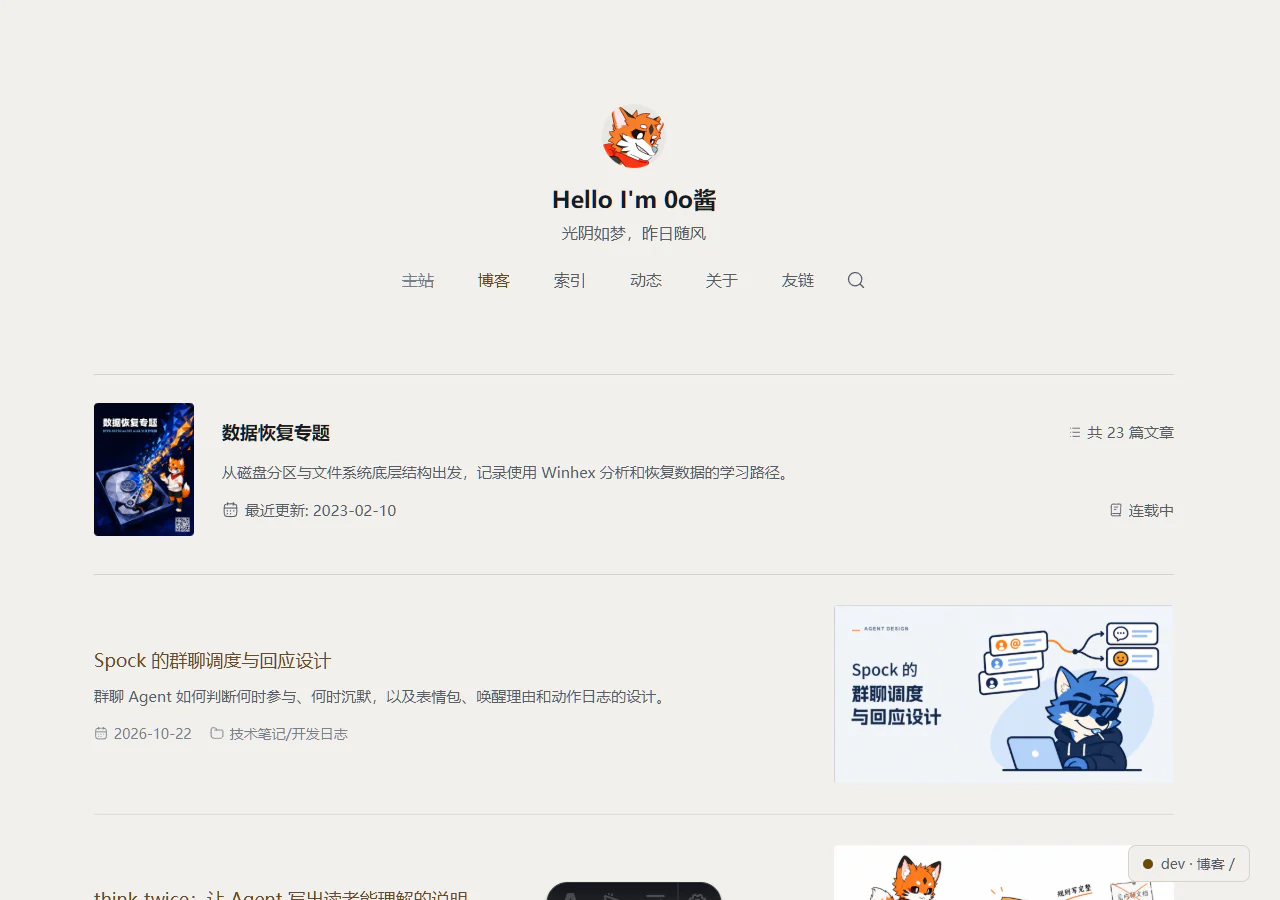
Cover Studio, the blog’s cover editor
Opening Photoshop just to make one cover felt cumbersome, so I built Cover Studio for the blog. It puts the source image, title, filters, and crop on one canvas. A cover is only a little over 200 pixels wide in a list, so its title has to remain readable; the header inside an article keeps the original image without text.
Text and images remain editable layers, including their position, type size, and overlays. A .cover file embeds its images so I can continue on another machine, then export WebP or PNG.
I later added MCP access. An agent can read the canvas structure, edit individual layers, inspect a screenshot, and export the result. I can continue editing that same canvas, while keeping the source file alongside the finished image.
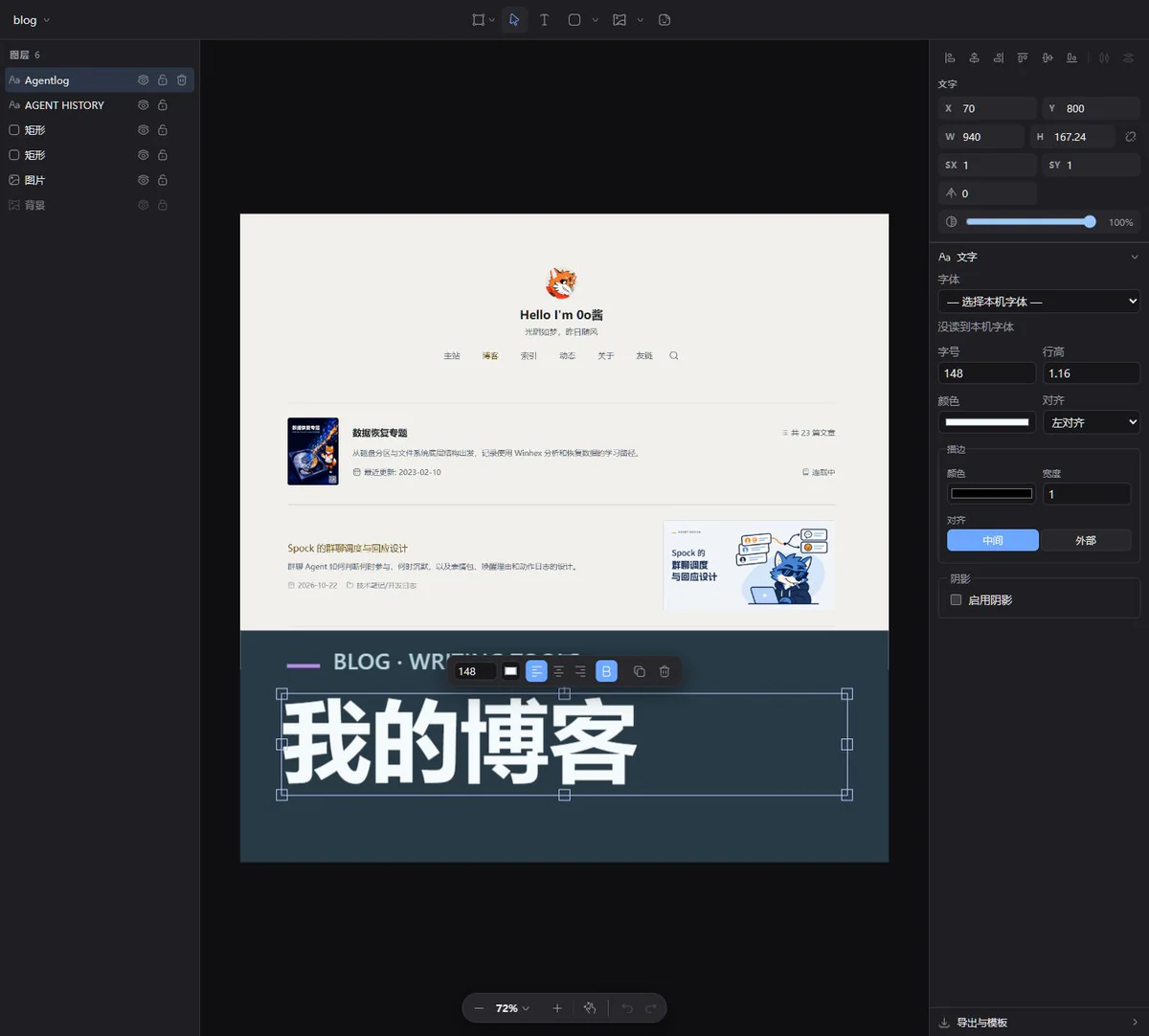 The canvas and layer-editing interface in Cover Studio