
AI chat inputs often need to reference a file, project, or person. Rendering @name is easy; keeping the object identifiable after its name changes, preventing Backspace from leaving half a label behind, and deciding what to send to the backend take more work.
Mentionly is the input library I wrote for those cases. Text and mentions share an editor; selected objects are edited as whole entities, and submission produces structured content rather than only a concatenated string.
A visible label and an object identity
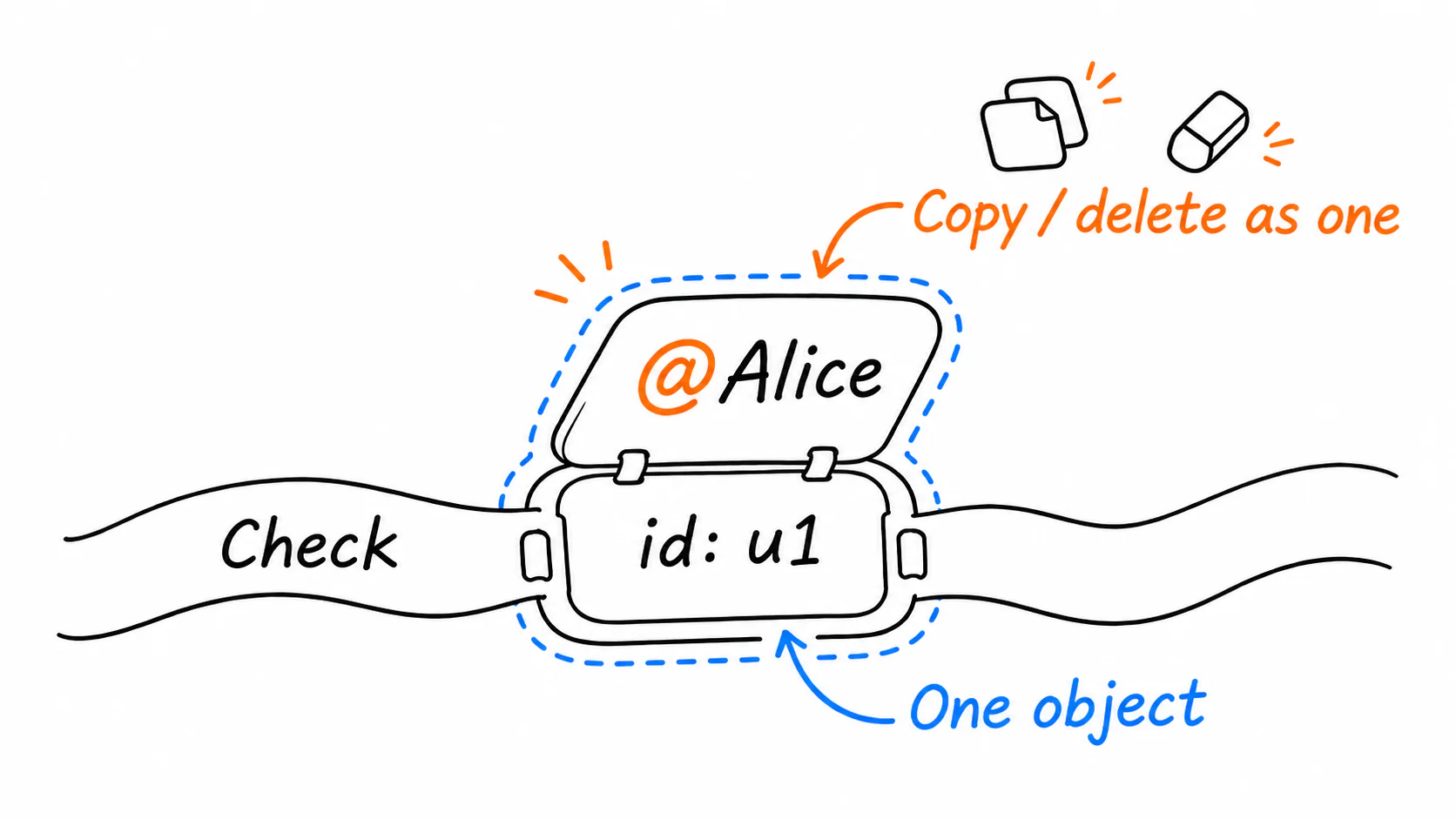
In “Please check @Alice,” the screen displays a name while the application may need a user ID. A mention keeps both: label for display, with id and data for the application.
[
  { type: 'text', text: 'Please check ' },
  {
    type: 'mention',
    trigger: '@',
    id: 'u1',
    label: 'Alice',
    data: { kind: 'user', userId: 'u1' }
  }
]
This is an example submission value. Ordinary text remains freely editable. A selected mention is atomic: editing half its name must not silently retain the original object's identity. Copying, pasting, deleting, and restoring content all work with the segmented value.
Several triggers can be configured. An application might use @ for people or files, and # or / for other objects and commands. Its toData() function captures the business payload when an item is selected.
IME and asynchronous suggestions
Real suggestion lists usually come from search APIs. A user can replace a query before its earlier request returns, so debouncing alone is insufficient: stale results need to be discarded, and paginated sources need a way to load more.
Chinese input composition needs its own handling. Unconfirmed phonetic input should not become a completed query, and Enter used to choose a character should not submit the message.
The suggestion position follows the caret and supports rendering outside the editor's ancestors so overflow does not clip it. Keyboard selection, focus, and accessibility relationships are handled alongside this behavior; applications remain free to design the list.
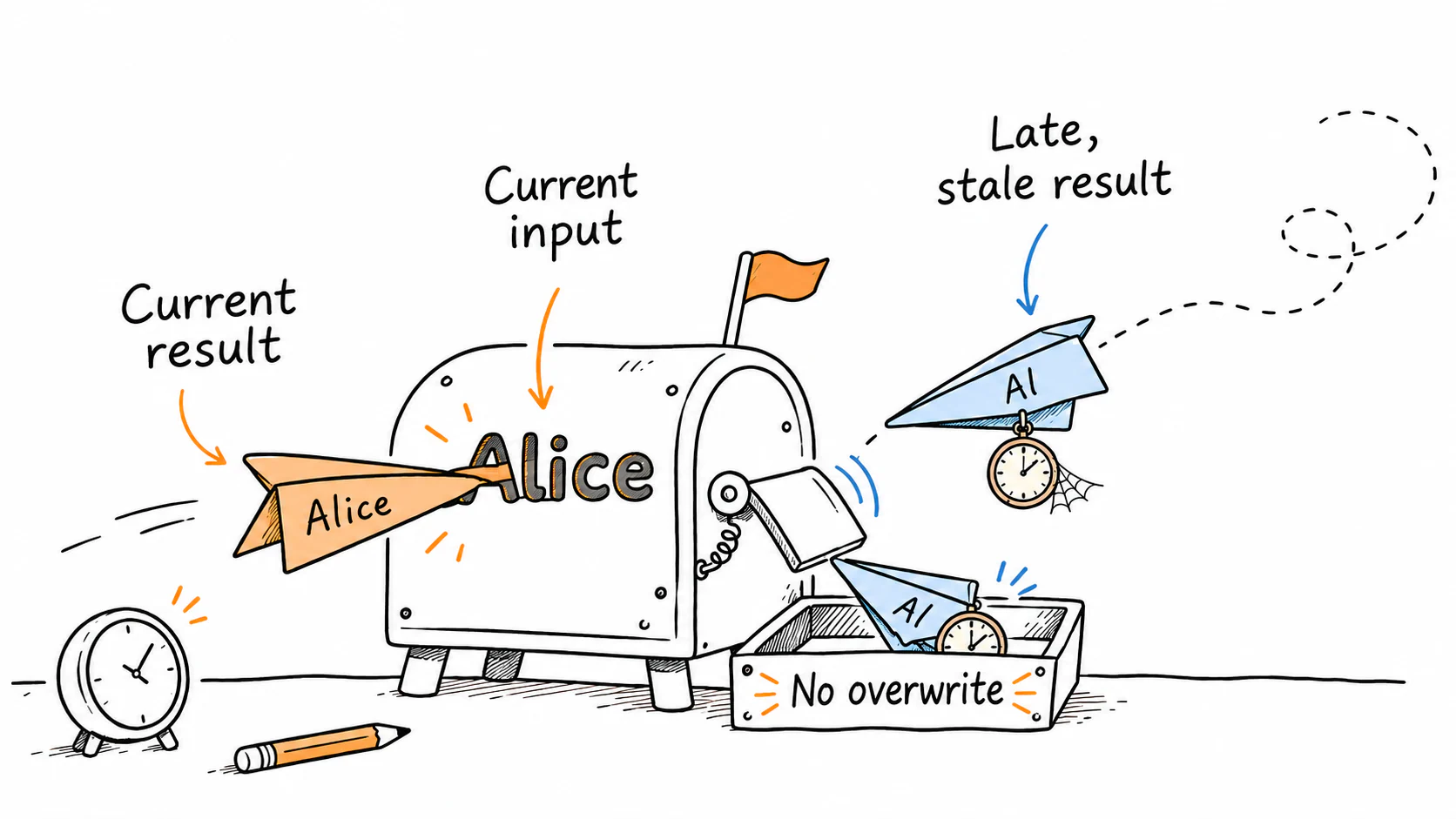 Suggestions follow the current input; a late response to an older query cannot replace them
From a Vue component to several adapters
Version 1.x centered on Vue 3's useMention and ready-made components. As other interfaces needed the same behavior, I extracted trigger detection, DOM editing, serialization, keyboard controls, and IME handling into the framework-independent @mentionly/core.
Version 2.0 adds Vue, React, and Svelte adapters. Vue retains MentionInput and MentionList; React and Svelte expose headless interfaces for application-owned rendering. The original mentionly package forwards the Vue implementation so existing integrations can migrate gradually.
I also added AI SDK and MCP converters and version-matched llms.txt files in the packages. A coding agent integrating the editor can read the rules for the installed version, including why the framework should not render children inside the DOM managed by the editor.
This portfolio uses the React adapter in its input.