
I often test the same reference images with different compositions, characters, and models. Generating one image in a web interface is easy. After a batch, the prompts, references, and results are scattered through chats and folders. A good image becomes difficult to reproduce a few days later.
Zoetrope is a local desktop workspace for that process. Conversation prepares a batch, Workspace manages inputs and tasks, Gallery displays results, and Collections keeps generation sessions worth returning to.
Prepare a batch in conversation
I want to ask for several compositions from a set of references, then try another model for comparison. The agent prepares a plan with the models, prompts, references, and counts. Generation enters the queue after confirmation.
One request can involve several models, but should not require a separate confirmation for each. A plan now contains several generation jobs, each for one provider/model. Confirming the plan creates the corresponding tasks.
I can revise a plan before confirming it. The backend checks its version, handles duplicate confirmations, and creates the tasks. Each task retains the confirmed models, prompts, and references, so later conversation cannot change inputs already submitted.
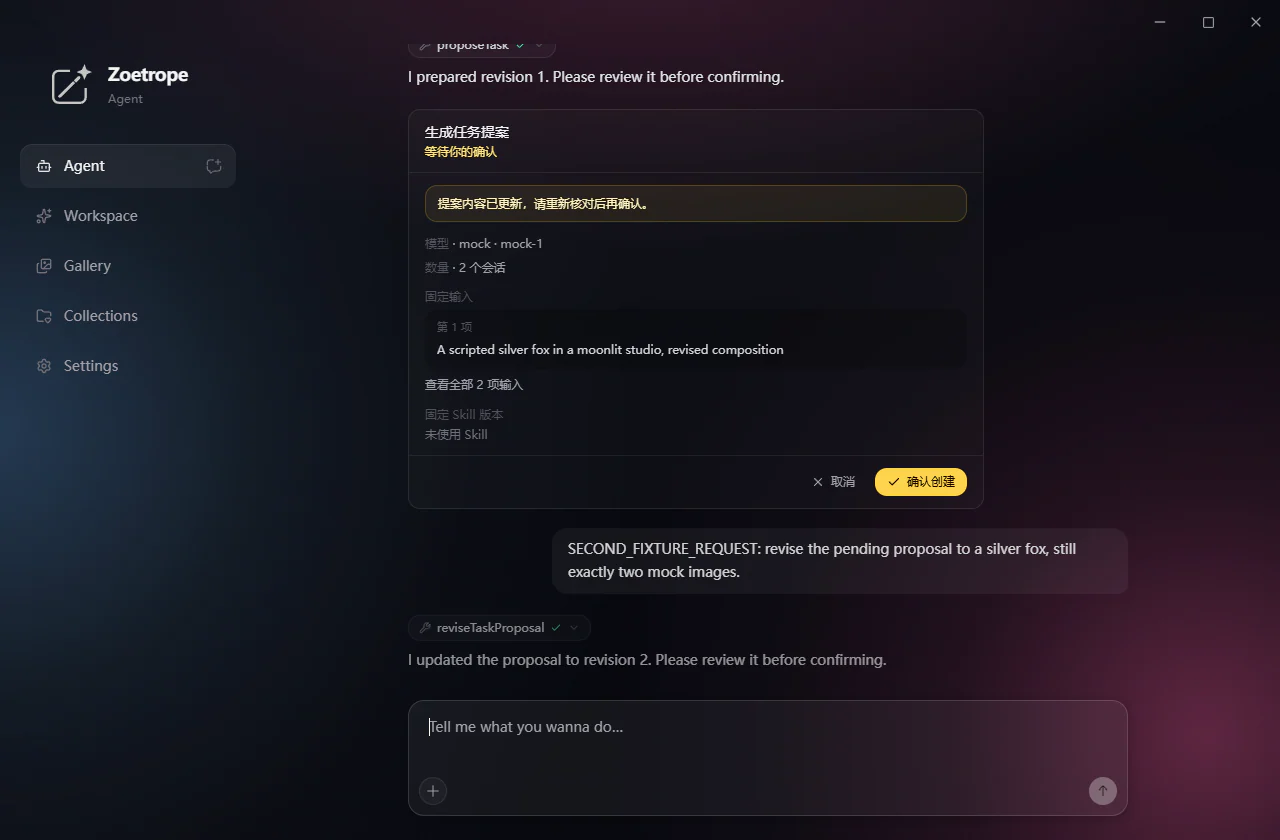 The revised pending plan, shown with a scripted test model
Follow a result back to its inputs
From a result in the gallery, I can find the original request, the prompt sent to the model, reference order, and generation parameters. Each task contains generation-and-editing sessions, whose messages link to original images, references, and generated assets.
Collections save Sessions as well. A useful result often has several edits behind it, and I want to keep the conversation that can be continued, rather than copy only its final image into another folder.
Provider differences belong in adapters. Queue execution, task state, and result management use common services. Waiting, running, and failed tasks remain visible, failed work can be retried, and saved plans and tasks remain after reopening the application.
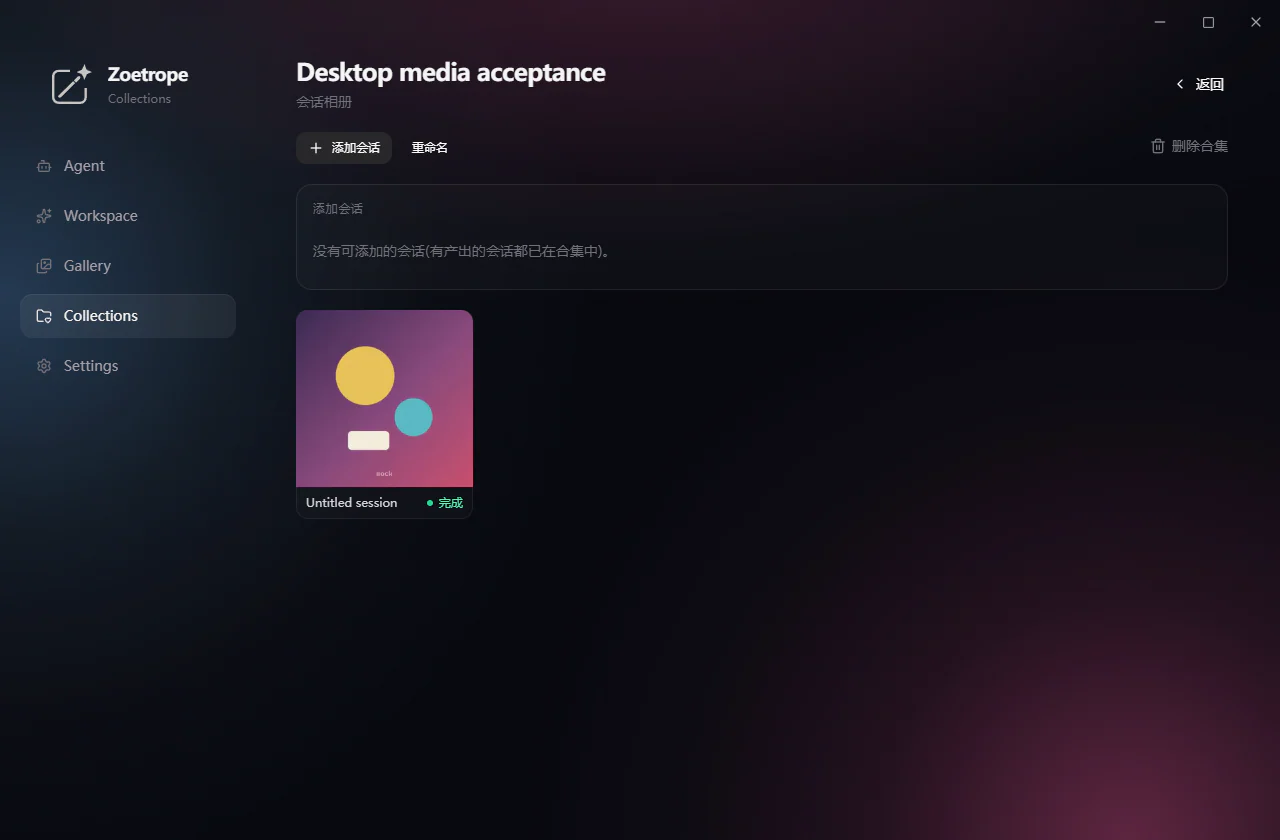 Collections retain sessions; this view uses the example content from desktop acceptance checks
Reusing styles, characters, and references
I started collecting reusable styles, characters, and reference combinations in Skills, along with prompts and image resources. Directory-based content packages can be installed, updated, and removed. A broken package is isolated from the other Skills.
Messages retain the content version used at the time. Updating a Skill later should not make an old image appear to have been generated from the new version.
Existing provider, task-pipeline, and media functionality has also been organized into application plugins. Those are separate from user Skills: editable creative material does not replace the application's agent behavior or execution rules.
Local storage and desktop debugging
SQLite holds structured data and the local filesystem holds images. Sharing a native database driver between Node tests and Electron development caused repeated ABI mismatches; I eventually moved to node:sqlite.
Desktop debugging also needs answers to concrete questions: which conversation is the agent processing, was the Task actually created, and what is the interface displaying? A development-only diagnostic plugin provides a shared, controlled MCP/HTTP entry point for business state, semantic UI observation, screenshots, and limited input actions. It lets me compare execution records with the actual screen during desktop checks.
The core generation workflow, gallery, and local Skills are implemented. Real-model checks and Windows installer work remain.