
After using several coding agents, I had conversation history in several places. A request might be in Codex, while the decision that followed was in Claude or Pi. Later I could remember roughly what had been discussed, but not where to look.
Agentlog collects those records. It reads histories already stored on my machine and writes a common archive directory. I can search it myself or connect its read-only MCP server so another agent can look up earlier work.
Finding the original words and context
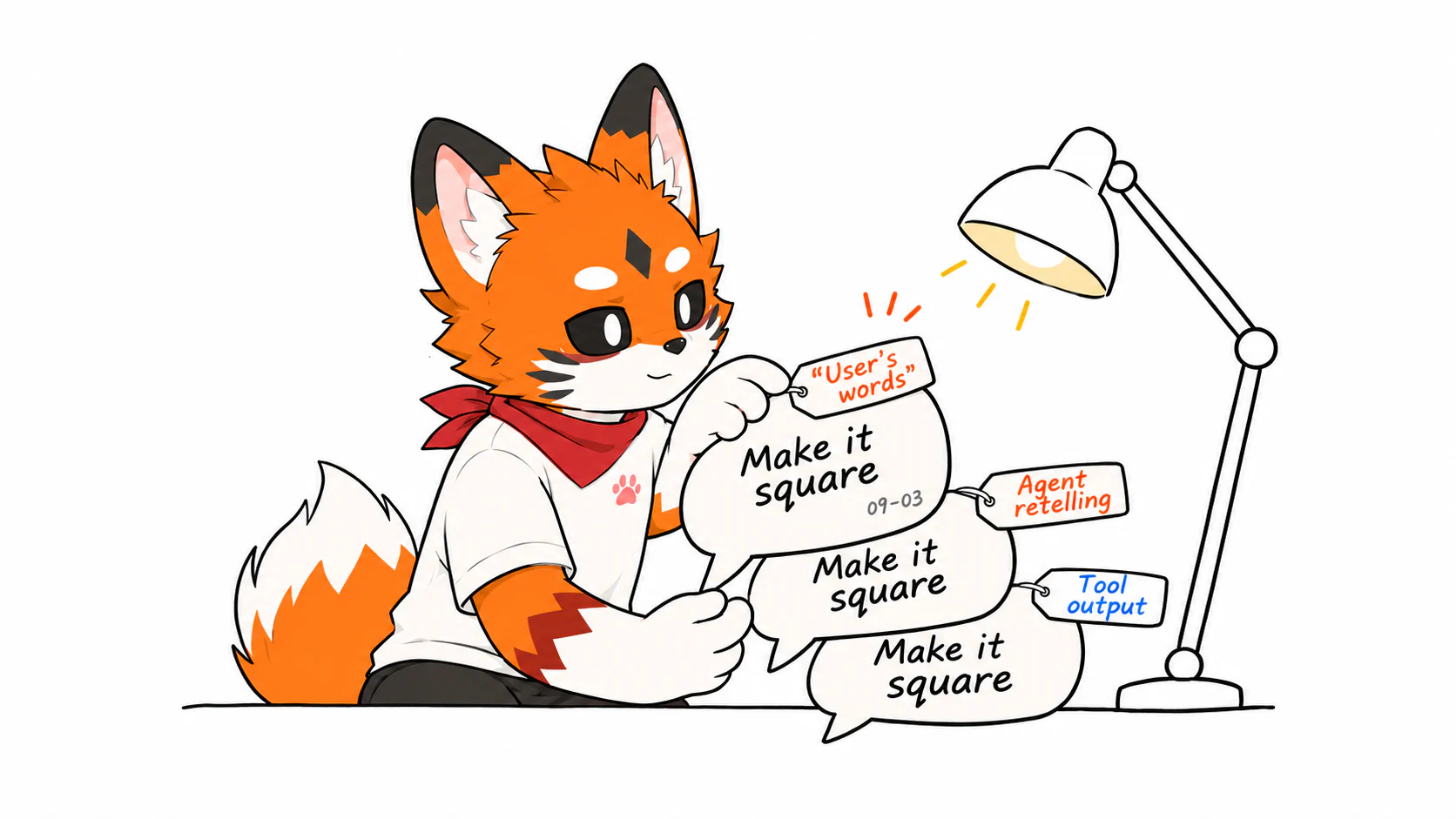
Literal search can find a relevant sentence without explaining whether it came from me, an agent's paraphrase, or tool output. Handoffs make this worse: the same request may be repeated in several summaries and dominate the results.
I added filters for speaker, project, time, and source. To find my own words, I can narrow the search to user messages and read the surrounding conversation. Repeated snippets are grouped, with their other locations retained.
For example, a project-scoped search from the command line:
agentlog search '封面' --repo blog --jsonThe MCP server follows the same pattern: search_sessions locates sessions and snippets, session_context opens nearby messages, and read_evidence reads the original field. References carry a content version so a reader can detect when an archived record has changed.
Archiving conversations from different agents
Adapters currently cover Claude, Codex, Pi, Cursor, OpenCode, Grok, and Kimi. Each reads its source's format and locations; the shared export layer writes the Store.
Full conversations are JSONL files, with one message per line. A separate card records the title, working directory, update time, and other session metadata. Generated summaries and indexes live separately from the archived conversations.
Store/
  chats/             Full conversations
  index/             Session cards
  derived/           Summaries, directories, search data
  progress.sqlite    Incremental progress
Subsequent exports skip unchanged conversations and update changed ones. Ordinary files make the archive easy to back up, search directly, and read after moving to another tool.
Organizing long conversations by task
A long conversation can contain several pieces of work, and one project can continue across many conversations. I added directories and task sections to summaries, then grouped related tasks into work topics with links showing continuations and dependencies.
A summary can sound plausible while grouping the work incorrectly. Topics retain original-text evidence, and I can rename or merge them and hide unsuitable relations. Human corrections are stored separately and survive later generation.
Generating summaries incrementally
The archive keeps growing, so processing it is not a single all-or-nothing request. Summary jobs have incremental caches, concurrency and budget limits, cancellation, retries, and saved progress. Recent work on the Pi backend also organizes directory generation, work topics, and publication as recoverable stages.
I still check real conversations for ideas reported as finished, later corrections left out, or an agent's guesses attributed to me. I also use Agentlog when preparing this portfolio, looking through the records for details worth writing about.
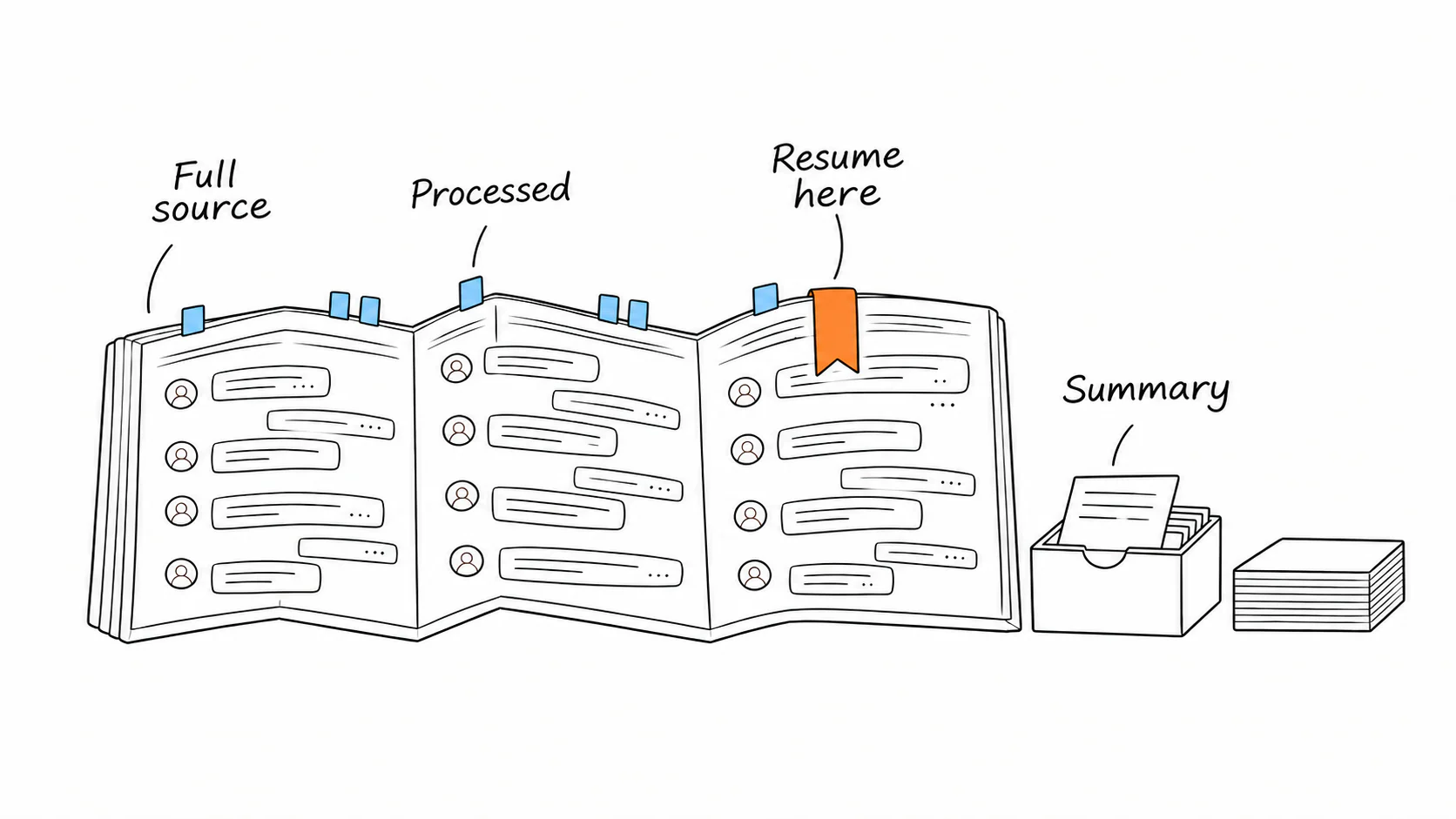 Keep the full source and processing progress, then resume summaries from the saved position